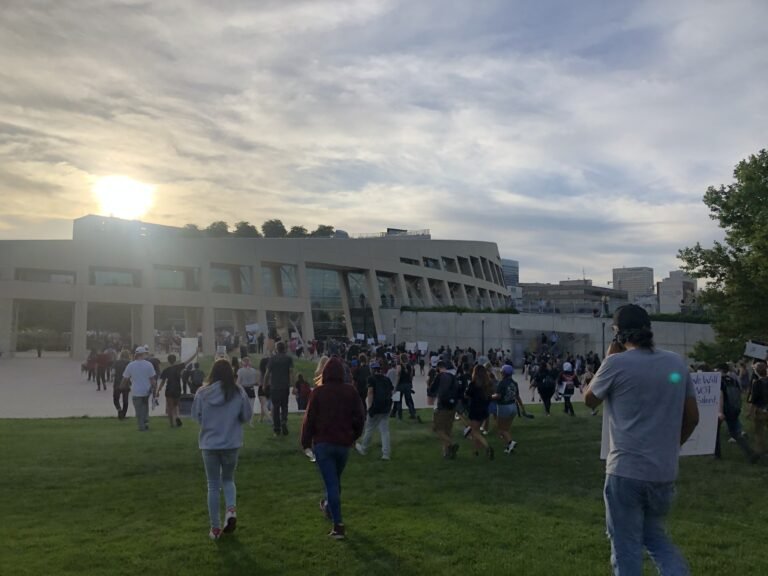
Can social media be utilized to bring about justice and “right the wrongs”? Can it help topple oppressive and corrupt governments?
I came into this course thinking that by the end of it, I would have a pretty clear view and the answers to these questions, but the more I learn, the more questions I have.
While yes, I genuinely believe social media has incredible power to bring about justice and amplify voices that would otherwise not be heard, I also think it can just as easily serve as a vehicle for propaganda, deepen existing divides, and give people the feeling of doing something without actually doing anything at all. Both of those things are true at the same time. I apologize if I am sounding pessimistic. I’m just trying to synthesize both my personal experiences with what I’ve witnessed on a global and public health scale and learned in this course.
On a personal level, I worry about my generation’s relationship with these platforms in a way that is hard to fully articulate. I see people around me, myself included, caught in these loops of seeking external validation, refreshing feeds, measuring their worth in likes and shares. It has become addicting for some people, and I think a real number of us have lost some touch with the world outside our screens in ways we do not always want to admit.
And yet, if you zoom out to the bigger picture, I think social media is one of the most powerful public health and political tools we have ever had access to. Those two things may feel contradictory, but a hammer can build a house or break a window. The tool is not the problem, how we use it is.
This actually connects to something I found really insightful in this year’s World Happiness Report, which was almost entirely centered around social media use and wellbeing. One of the interesting findings was that outside of the English-speaking world and Western Europe, most people actually reported much more positive views of social media, and the links between social media use and wellbeing were significantly more positive in those regions (World Happiness Report, 2026). This suggests that experience is not universal, and culture plays a much bigger role in our utilization of social media.
The report also found that platforms in Latin America where the main feature is algorithmic feeds and influencer content are more likely to be negatively linked to life satisfaction than platforms that primarily facilitate direct communication between people (World Happiness Report, 2026). And more broadly, the most problematic platforms tended to be the ones where use is mostly passive and the content is heavily visual, like TikTok for example. This approach naturally encourages you to compare yourself to others.
If passive, comparison-driven consumption is where things go wrong, then maybe the antidote is designing spaces that are oriented around active participation and engagement rather than watching. What would a social media platform built specifically for activism look like if it centered on being a participant rather than an audience member?
No conversation about social media and political movements is complete without talking about the Arab Spring, which began in late 2010 and swept across the Middle East and North Africa through 2011. It became almost immediately synonymous with the idea of social media as a revolutionary force. Twitter and Facebook were credited with helping citizens organize protests, share information quickly, and bypass state-controlled media. Social media accelerated the speed at which information and energy moved across borders and between movements in a way that had never happened before.
But the story is more nuanced. In many of these countries that experienced uprisings, it led to another repressive leader taking over, civil war, or a humanitarian catastrophe, with social media being used by both sides, including extremist groups that used it to recruit and spread propaganda (History, 2018). Religious militias and authoritarian governments proved just as capable of using these platforms strategically as the activists who had pioneered their use. Tunisia is the one country from the Arab Spring that is most often cited as a success story, but even there, democratic gains have faced serious challenges in recent years.
None of this is to say that social media failed. I think it is more accurate to say that social media can open a door, but it cannot maintain the momentum it starts. The movements that succeeded were the ones that took the energy and organization built online and translated it into sustained, coordinated action in the real world. A viral moment is not the same as structural change.
I sometimes think about what the trajectory of some of these movements might have looked like if evidence of injustice was never posted. The idea that justice, or at least the public reckoning that precedes it, sometimes depends on whether someone happened to have their phone out at the right time. Social media did not create the conditions that led to those deaths, but it made it impossible for the world to look away.
So where does that leave us? I do not think social media can topple a government on its own. I do not think it can deliver justice by itself. What I do think is that it has fundamentally changed the speed and scale at which people can find each other,share experiences, and build collective pressure to force conversations that powerful people would prefer not to have. Social media is an accelerant. It is not a foundation.
And maybe the most important thing I am taking away from this semester is that the same qualities that make these platforms powerful for justice movements make them equally powerful for the forces working against those movements. There is no version of social media that only the good guys get to use. Which means the question was never really whether social media can bring about justice. It is whether the people who want justice are willing to use it more strategically, more sustainably, and more honestly than the people who do not.
Reference
History Channel. (2018, May 8). Here’s how the Arab Spring started and how it affected the world [Video]. YouTube. https://www.youtube.com/watch?v=Fgcd5ZcxDys
World Happiness Report. (2026). Executive summary: Happiness and social media. https://www.worldhappiness.report/ed/2026/executive-summary-happiness-and-social-media/#chapter-8-internet-use-social-media-and-wellbeing-the-role-of-trust-social-connections-and-emotional-bonds